Grammar
Understand how words function and why a grammatical choice is correct. Practise applying rules in context, rather than choosing only what sounds right.
 Enquire
 Primary 1–6 · Groups of no more than four
Understand the grammar. Explain the answer. Shape the writing. Children learn the language concepts behind their schoolwork, then practise applying them to unfamiliar questions and tasks.
Book a free 15-minute assessment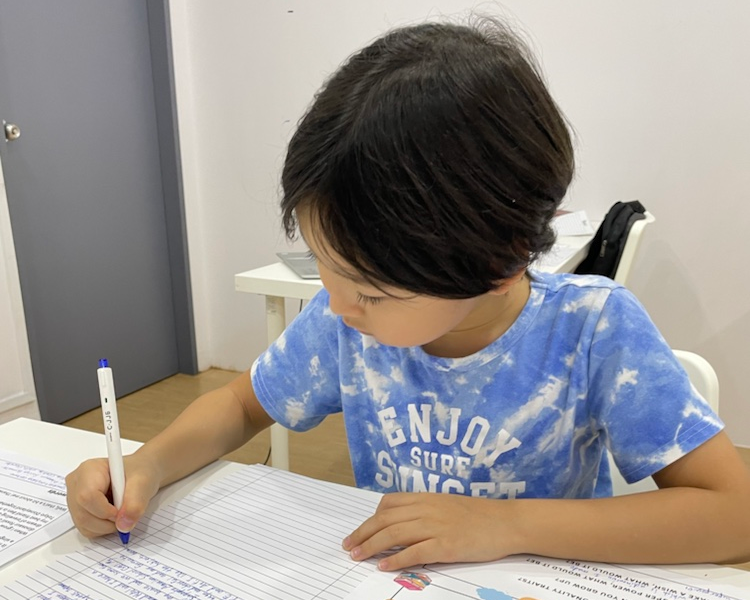
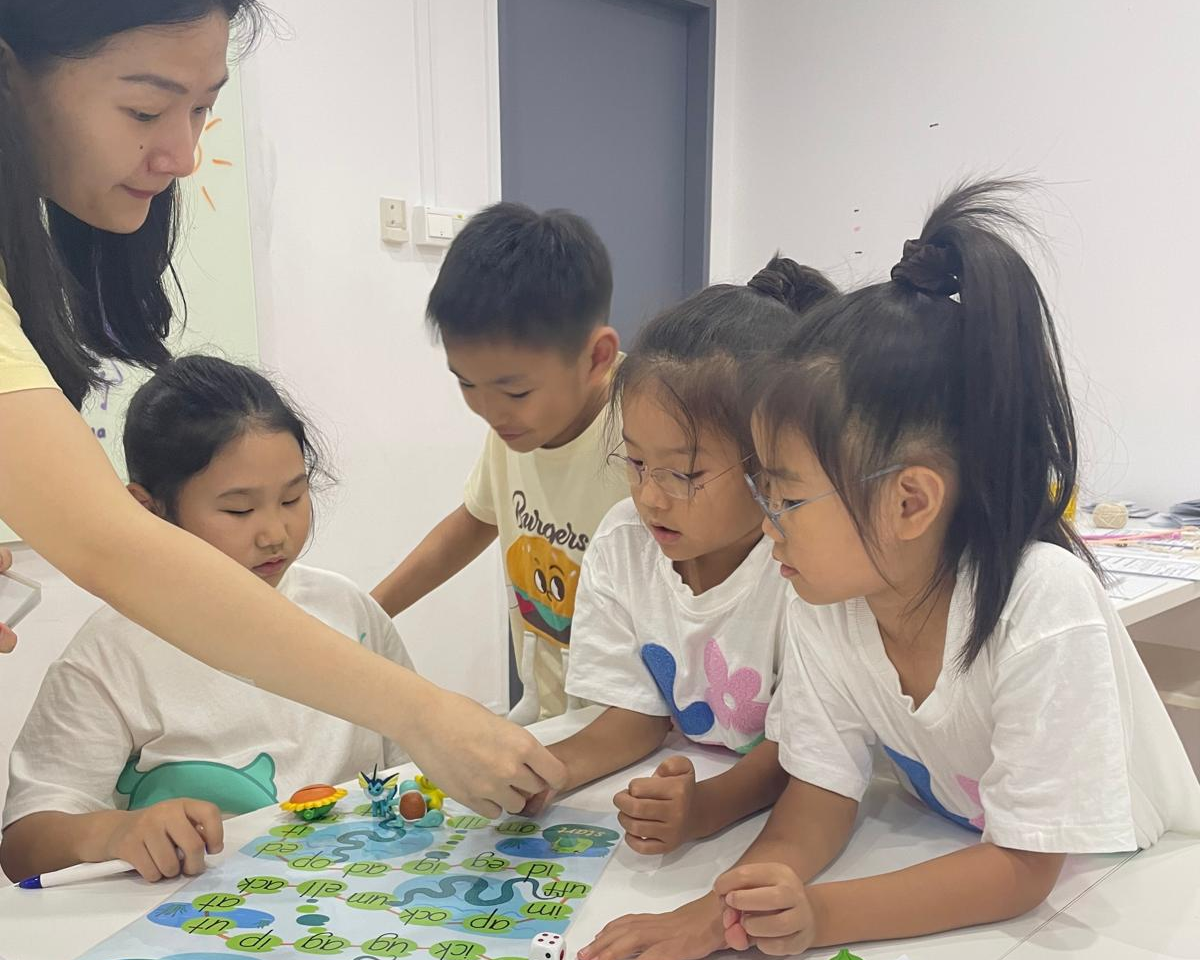
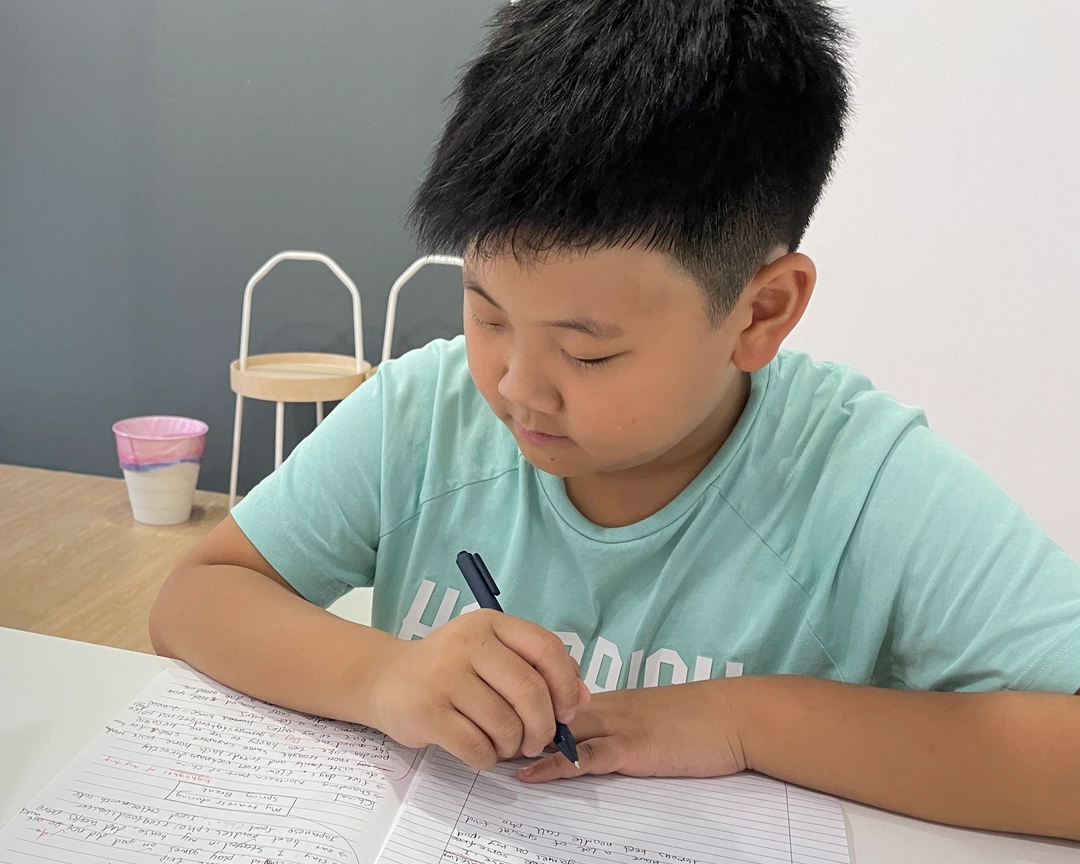
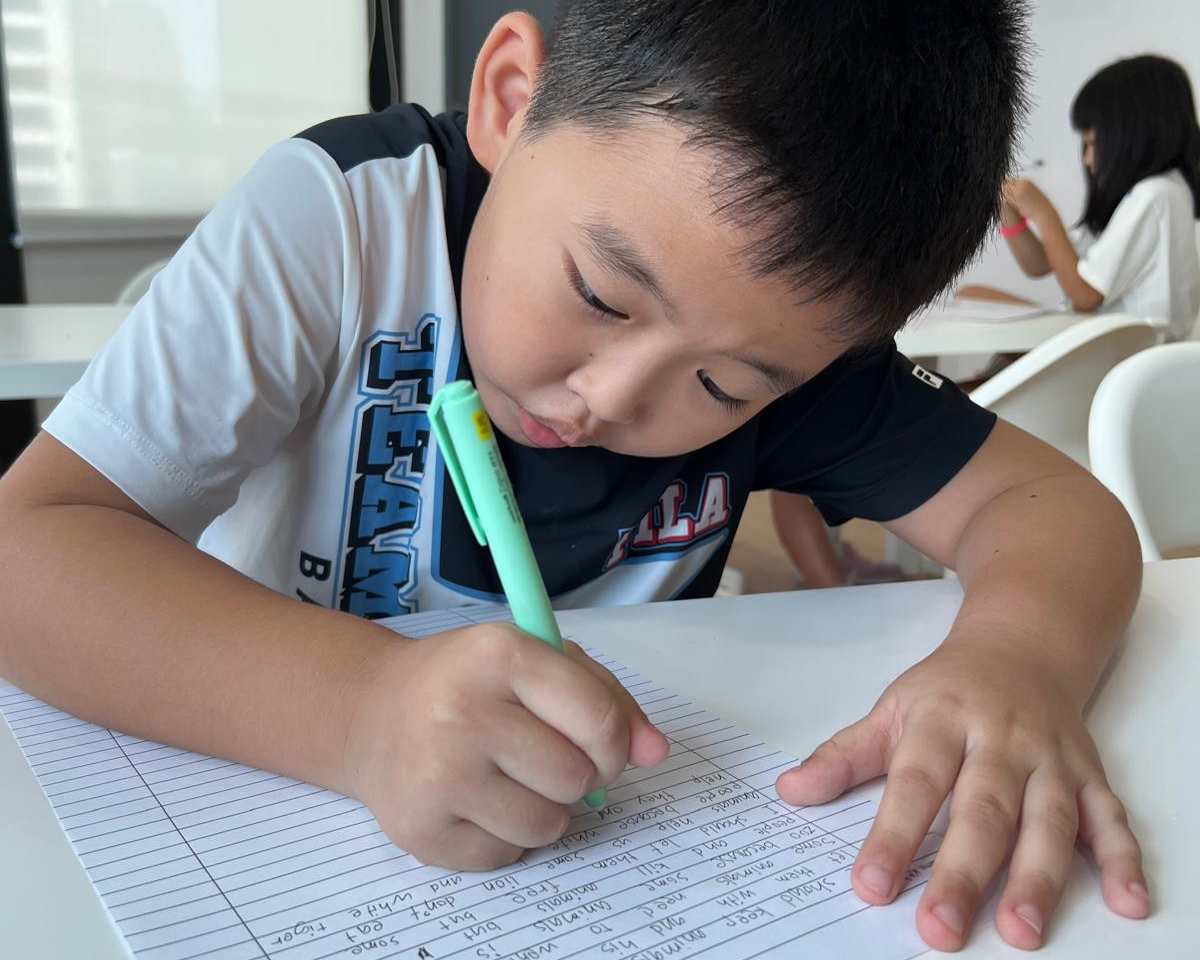
1 / 4 · Moments from our classroom
The plan is built around your child’s strengths, gaps and next goals, alongside grade-level expectations. In a group of no more than four, each child receives direct teacher instruction and review and application work prepared for their learning priorities.
What your child learns
Understand how words function and why a grammatical choice is correct. Practise applying rules in context, rather than choosing only what sounds right.
Build, combine and restructure sentences while preserving meaning. Understand how changes to sentence structure affect the relationship between ideas.
Read varied texts fluently, understand vocabulary in context and follow how ideas develop across sentences and paragraphs.
Identify key details, sequence events, explain cause and effect, make inferences and evaluate ideas. Learn to support answers with relevant evidence from the text.
Develop planning, structure and “show, not tell” techniques. Work on turning ideas into a coherent piece of writing, choosing details purposefully and reviewing what has been written.
Choose words precisely, recognise spelling patterns and check written accuracy. Connect language knowledge to the choices children make in their own reading and writing.
Inside the lesson
The teacher explains and models the concept, connecting it to what the child knows and identifying where the reasoning breaks down.
Purposeful practice revisits the concept in different sentences, questions and writing tasks. The aim is understanding that transfers beyond a familiar exercise.
Teachers check recall and independent application, then choose what to consolidate or introduce next. School expectations give direction without overlooking gaps in earlier learning.
The group has no more than four students. Each child follows an individual learning plan and receives direct teacher instruction. Independent review and application work are prepared around the concepts that child is currently mastering; children do not all need to work on the same page.
Yes. Grammar, sentence structure, vocabulary, comprehension and composition develop the language skills children need for school questions and written tasks. Plans take grade-level expectations into account while addressing the understanding needed to apply those skills.
We welcome children with different starting points and school experiences. Tell us your child’s current school, year and learning needs so we can consider their school expectations alongside their current skills.
Feedback after every class notes the learning covered, teacher observations and next steps. You may also book a complimentary time with the teacher to discuss your child’s progress in more depth.
Tell us your child’s age, school year, areas of concern and preferred date and time for a free 15-minute assessment.
Looking for another stage? Explore Preschool Phonics