English programmes · N2 to Primary 6

English programme from Preschool to Primary 6

Systematic phonics, grammar, comprehension and writing—taught in a deliberate sequence and matched to what your child is ready to learn next.

Tell us your child’s age, school year and preferred assessment date and time.

Concepts taught systematically Assessed placement Small-group teaching Clear parent updates

Our English programmes

Designed for each stage of learning.

Our Preschool Phonics and Primary English programmes build strong foundations, then help children apply those skills with increasing confidence and independence. Assessment identifies the most suitable starting point and learning priorities.

N2–K2 · Levels 1–6

Preschool Phonics Programme

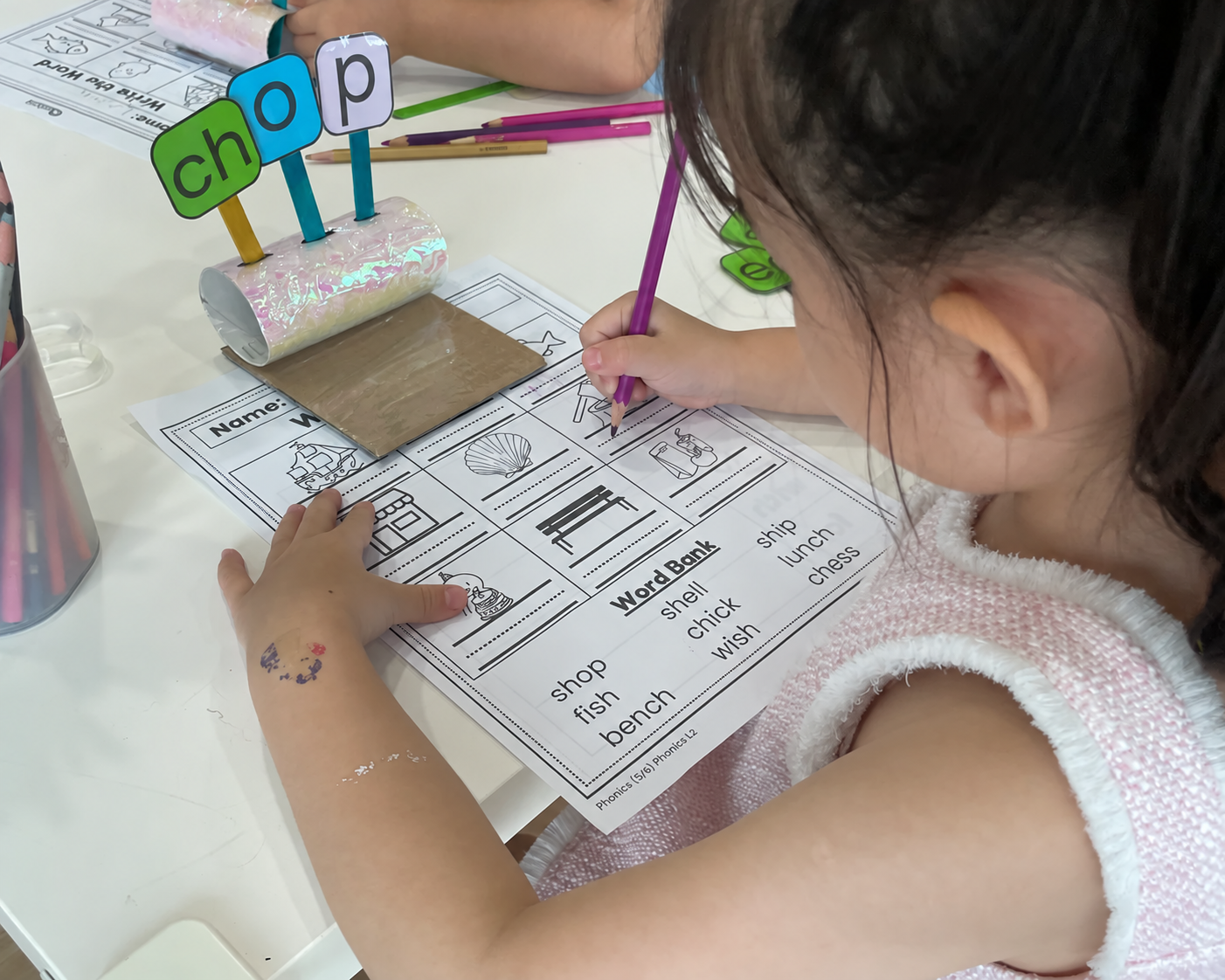
Children connect sounds to spellings, then practise reading unfamiliar words, spelling accurately, understanding passages and writing their own sentences—with growing confidence.

  • Systematic Phonics

    Learn 40 core speech sounds and blend them to read unfamiliar words — not memorise word lists.

  • Spelling Patterns

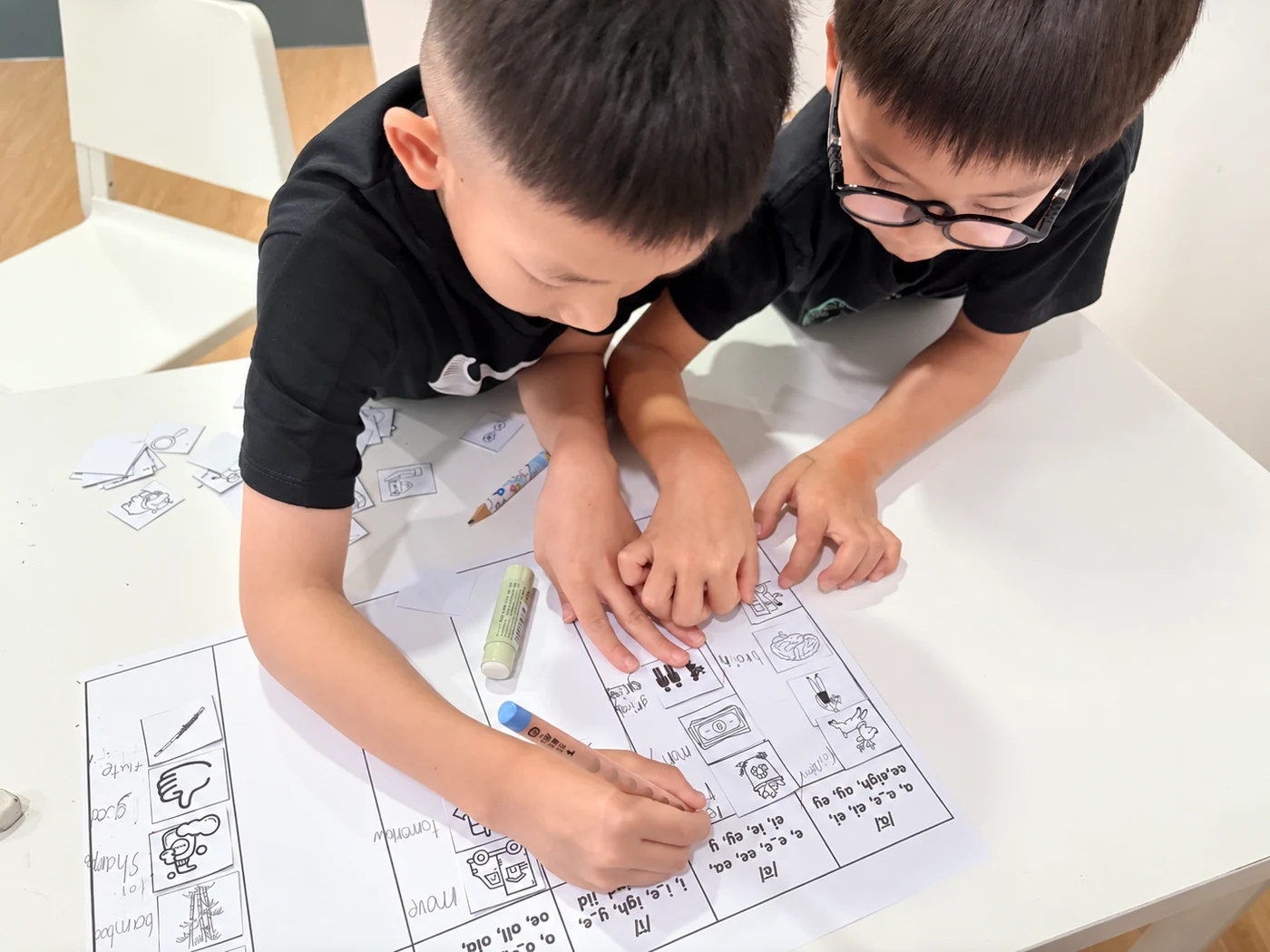
    Recognise and recall 60+ letter and grapheme spellings, and apply these patterns to spell words.

  • Reading & Comprehension

    Read with growing fluency and confidence, and understand sentences and passages.

  • Sentence Writing

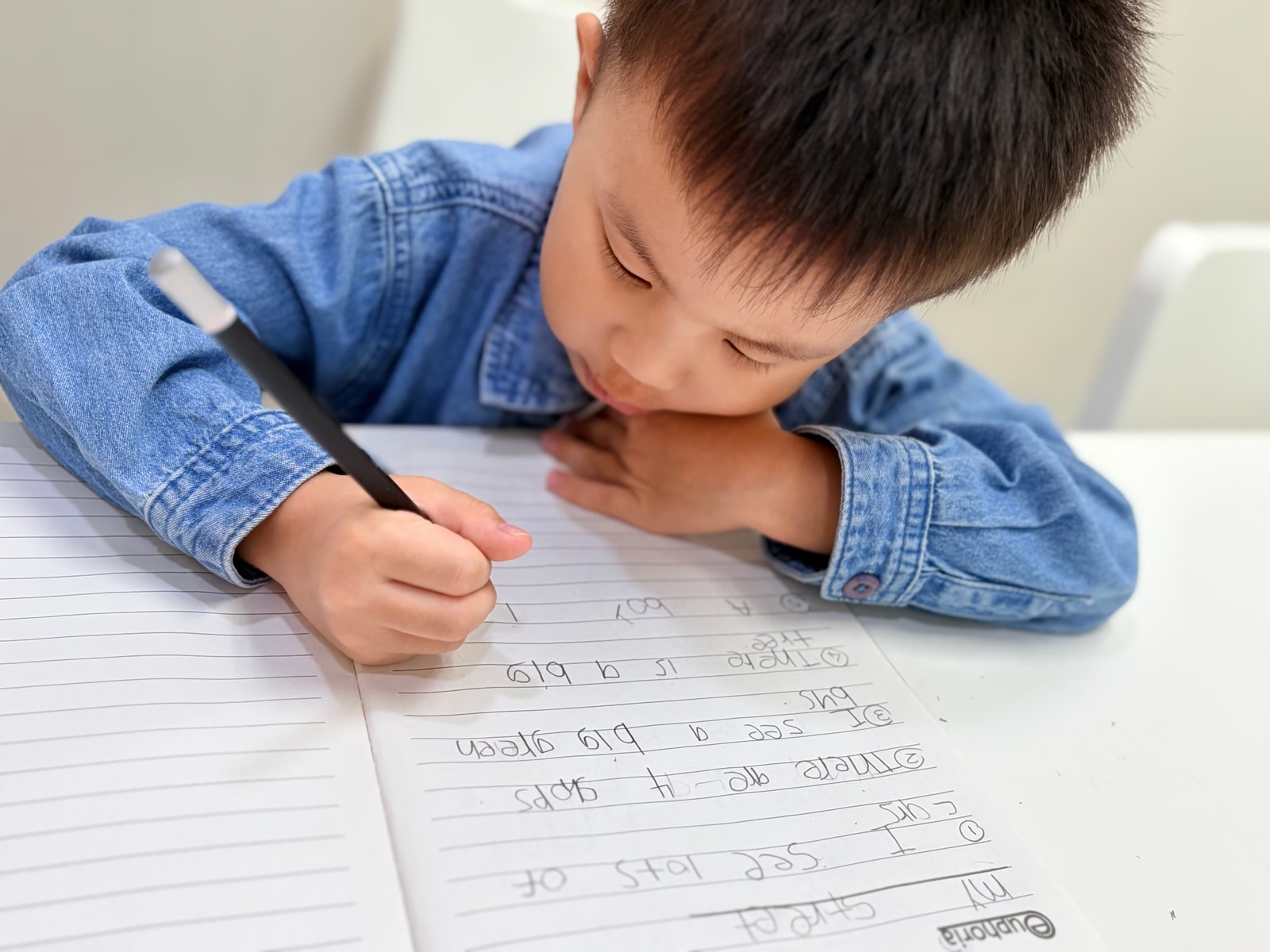
    Use sight words, vocabulary and sound–spelling knowledge to write sentences.

  • Reading & Writing Stamina

    Build the confidence and stamina to sustain reading and written work.

  • School Readiness

    Grow familiar with school-style written tasks towards K2.

Placed by skills, not age alone.

Assessment helps us find your child’s starting level.

6 progressive levels of systematic phonics.

P1–P6 · Up to four students

Primary English

Build the language skills behind confident schoolwork. Children learn the rules, reasoning and writing techniques, then practise applying them to unfamiliar questions and tasks.

  • Grammar

    Understand how words function and apply grammar rules accurately in context.

  • Sentence Structure & Synthesis

    Build, combine and restructure sentences while preserving their meaning.

  • Reading Skills

    Read varied texts fluently, understand vocabulary in context and follow how ideas develop.

  • Comprehension Skills

    Identify key details, sequence events, explain cause and effect, make inferences and evaluate ideas — supporting answers with evidence.

  • Composition Writing

    Planning, structure and “show, not tell” techniques.

  • Vocabulary, Spelling & Editing

    Choose words precisely, recognise spelling patterns and check written accuracy.

An individual learning plan
for every child.

Groups of no more than four, with teaching and practice tailored to each child’s priorities and school expectations.

Free 15-minute assessment

Begin with what your child can do.

Start with a free 15-minute assessment to help identify your child’s current skills and learning needs. We’ll recommend a suitable starting point—you don’t need to choose a level yourself.

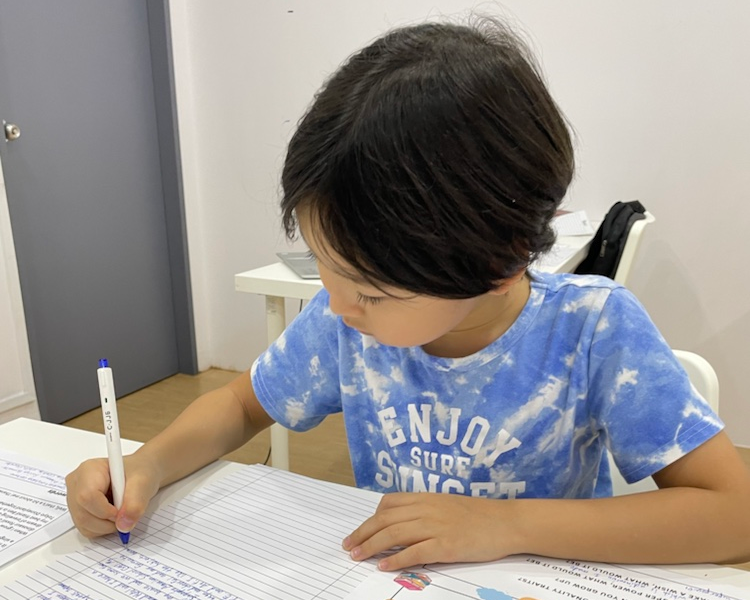
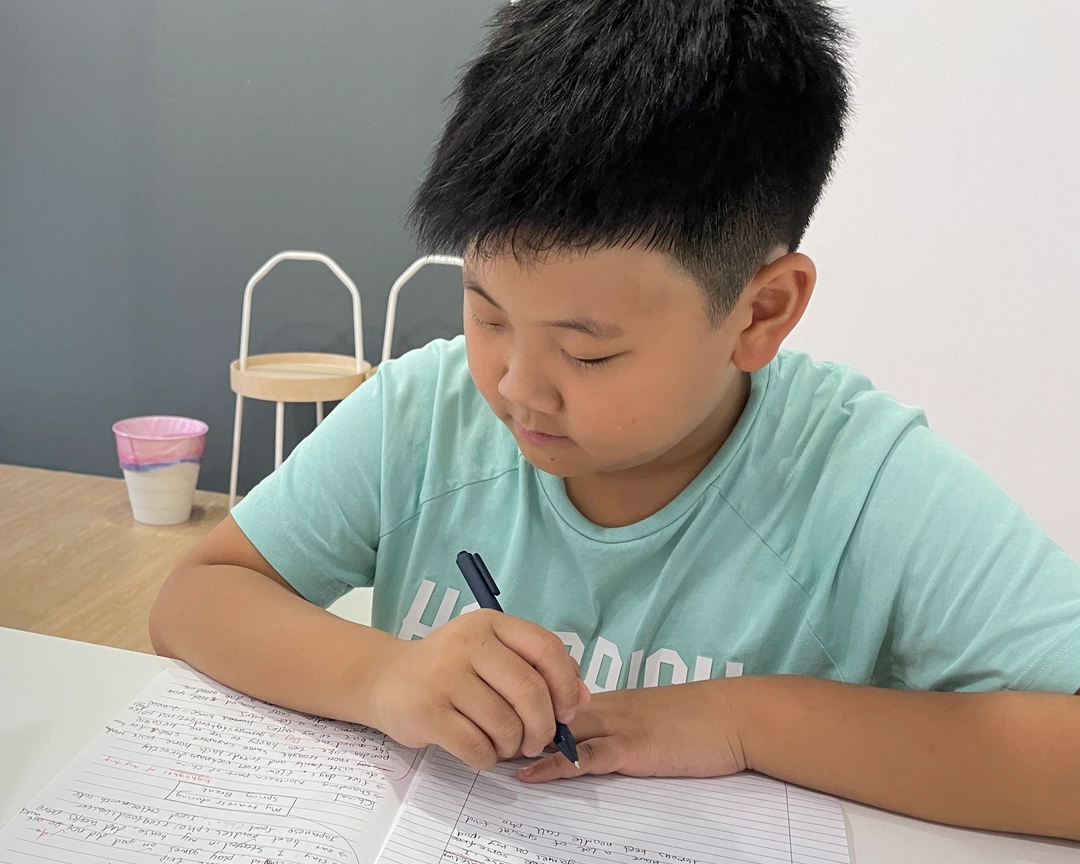
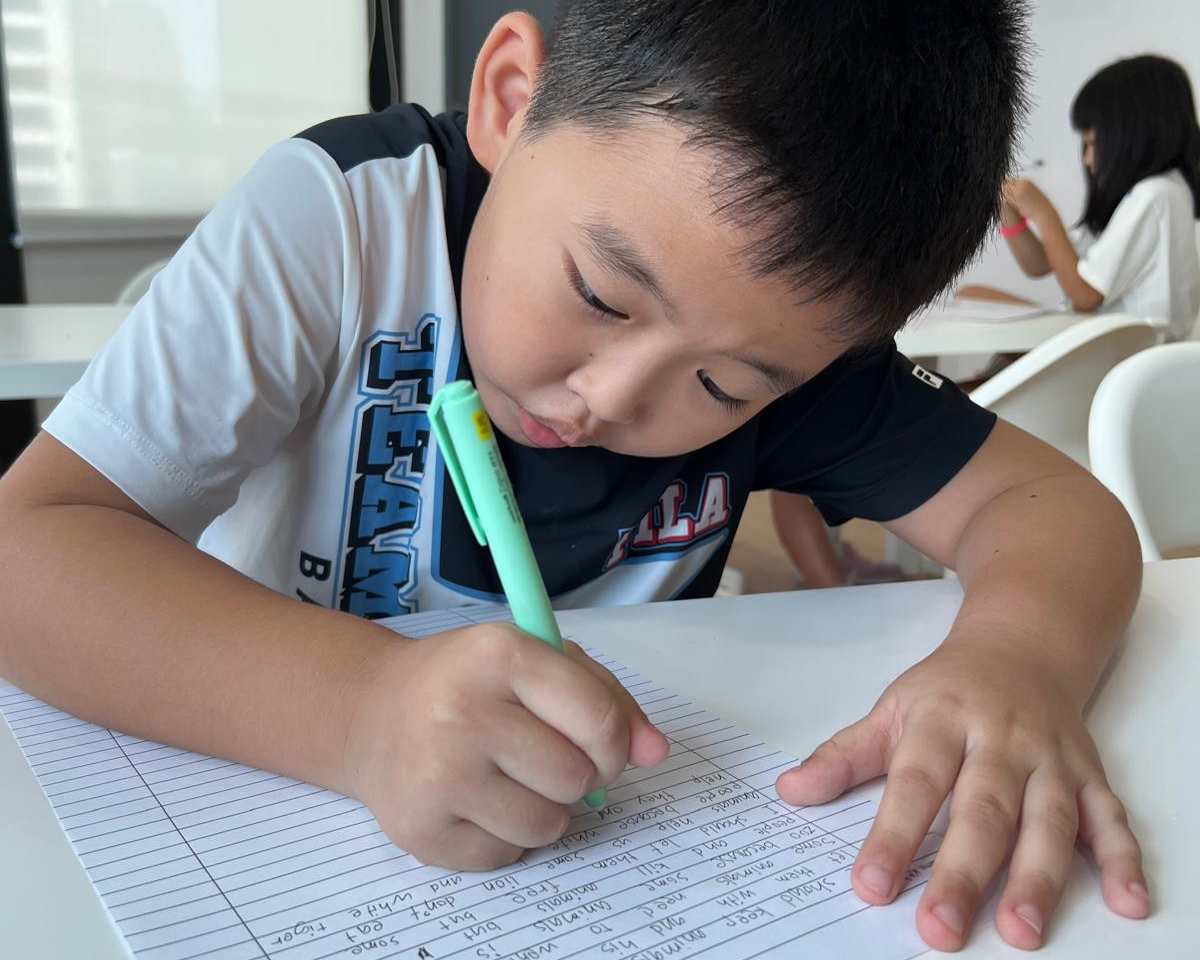
A consultation at Euphoria, discussing written work together around a classroom table

Your child’s starting point

Current skills · Strengths and gaps · Learning goals · Suitable class
N2–K2A suitable Level 1–6 starting point

Based on the phonics, reading, spelling and comprehension skills your child can already use.

Primary 1–6A focused set of learning priorities

Based on strengths and gaps across grammar, comprehension, composition, reading and spelling, alongside grade-level expectations.

Ready to find your child’s starting point? Send us your preferred date and time. We’ll confirm availability with you.

Book a free 15-minute assessment

How Euphoria teaches

Go deeper. Build understanding. Work towards mastery.

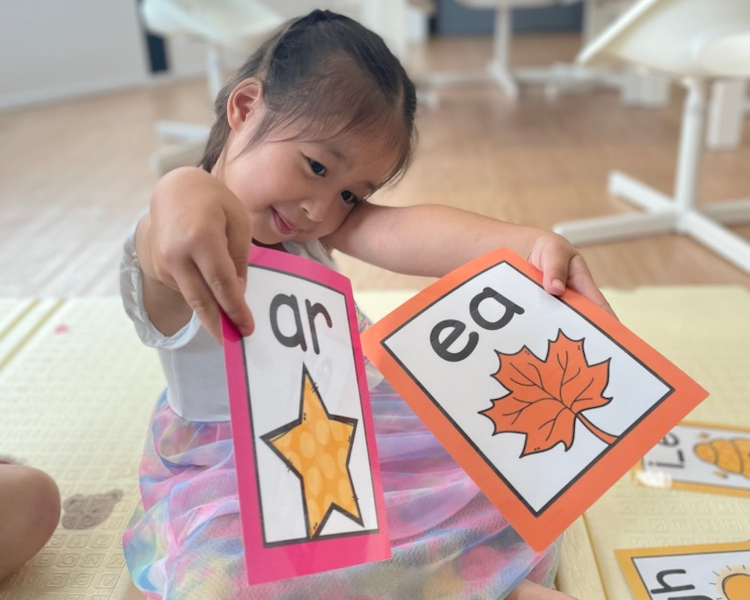
Each concept receives sustained, purposeful practice. Children meet a spelling pattern across varied words, read it in sentences and recall it when spelling. Grammar and writing concepts are explained, practised and revisited so children can use them independently. Our materials are deliberately sequenced to build depth, fluency and confidence.

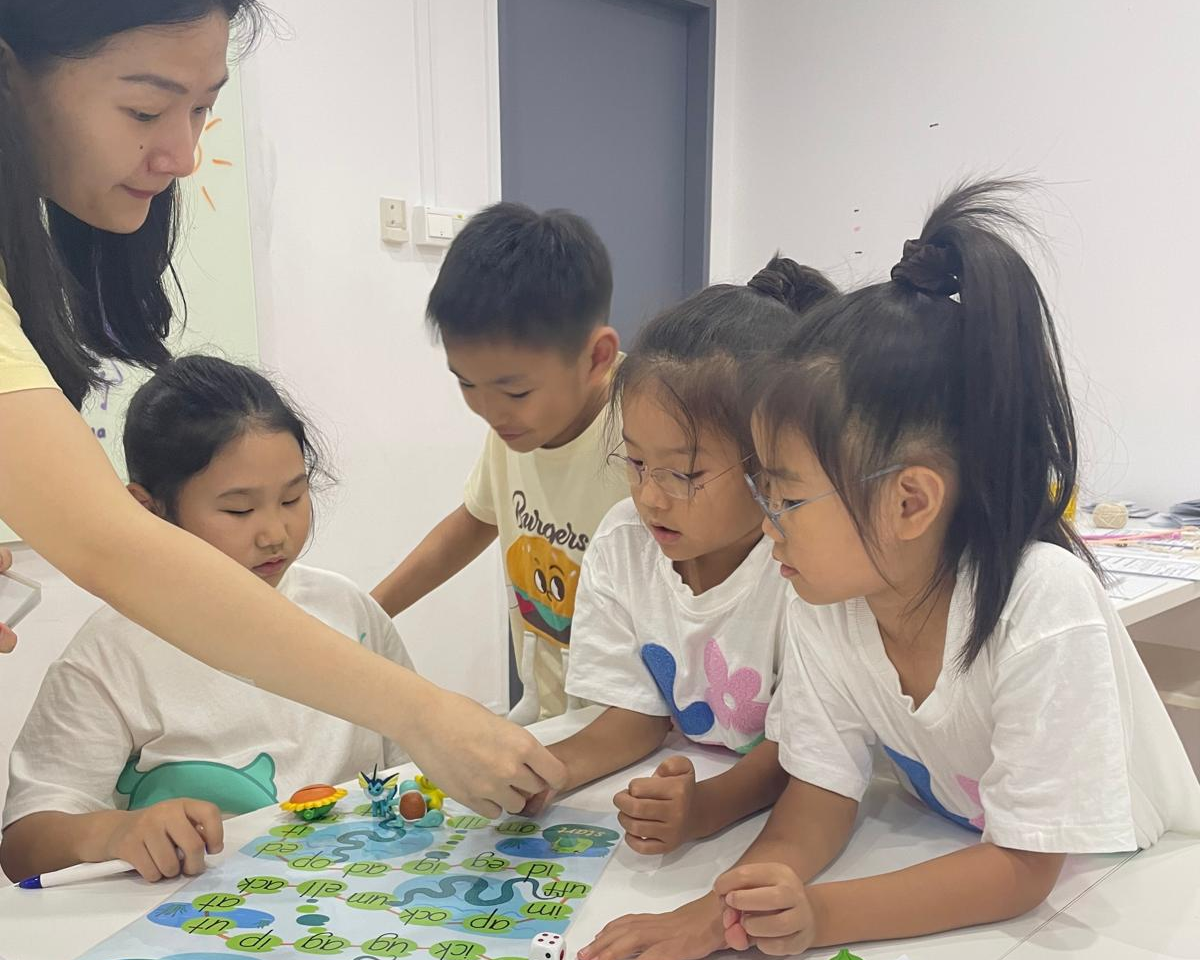
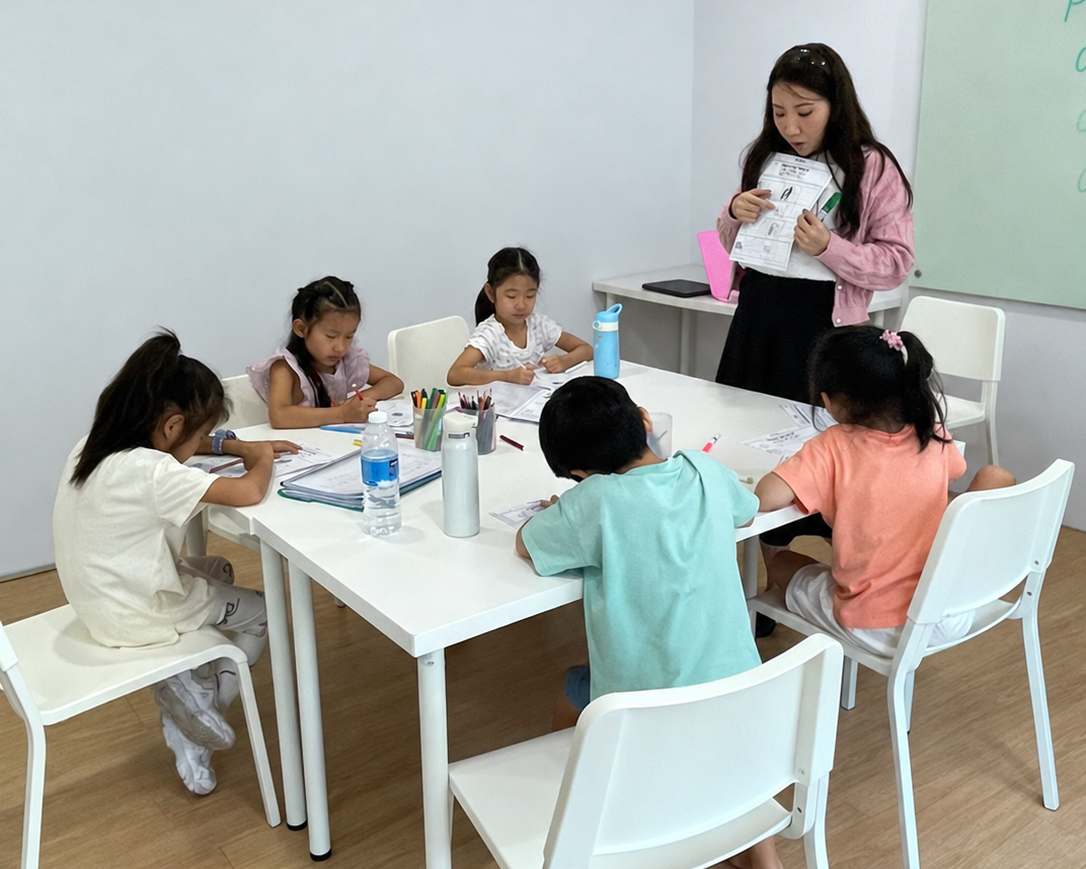
A teacher guiding five children through a classroom phonics lesson
BuildA clear learning sequence

Teachers model each concept and connect it to what the child already knows. Primary concepts align with grade-level expectations.

PractiseDepth through varied practice

Carefully chosen words, sentences and tasks reinforce the same concept from different angles, with opportunities to revisit and consolidate it.

ApplySkills that work together

Children use phonics, spelling, vocabulary, grammar and comprehension in reading and writing, putting their learning into practice.

CheckProgress towards mastery

Teachers check recall and independent application, then adjust the next step. Small groups make room for direct guidance and precise feedback.

About Euphoria

Established in 2021, Euphoria Education helps children from preschool through the primary years grow in English. We welcome different starting points and learning experiences, nurturing the joy of learning through teaching that meets each child where they are. In our small-group setting, we take time to know our students, listen to their questions and address gaps in their understanding. Through thoughtful guidance and purposeful practice, children build real skills, experience success and grow in confidence. Beyond school achievement, we nurture curious, independent thinkers who can question, reason and apply what they learn.

Questions parents ask

About our programmes.

A smiling child in a red polka-dot dress raising her hand enthusiastically
What is the difference between the two programmes?

Preschool Phonics (N2–K2) builds progressively through six levels: from letter sounds and simple word blending to alternative spelling patterns, longer words, reading comprehension and independent sentence writing. Guided practice and cumulative revision help children remember, distinguish and apply what they have learnt.

Primary English (P1–P6) gives each child an individualised learning plan within a small group, developing mastery of the language concepts they need next in line with grade-level expectations.

How is Euphoria different?

Preschool Phonics: 40 core speech sounds and 60+ letter and grapheme spellings. Graphemes are letters or groups of letters that represent sounds. Across six progressive levels, children practise using these sound–spelling connections to read unfamiliar words and spell, rather than relying on rote memorisation. Children are grouped by assessed ability, not age alone.

Primary English: an individual learning plan for every child. In groups of no more than four, each child receives direct teacher instruction and practice selected for their learning gaps and next goals, in line with grade-level expectations. The plan guides what each child works on and practises next.

Across both programmes, teachers explain concepts explicitly, provide sustained practice and check that children can apply their learning independently.

How do you decide where my child should begin?

Age and school year give us context, but current skills determine the starting point. We consider phonics and spelling knowledge, reading accuracy, fluency, comprehension and stamina, grammar, writing, and the level of support your child needs to work with appropriate independence.

My child can already read. Why assess phonics and spelling?

Some children recognise familiar words from memory or exposure but find unfamiliar words difficult to decode and spell. We check whether your child can use the sound–spelling system independently, not simply recall a familiar word.

How can different Primary school years learn in one group?

Primary groups are kept to a maximum of four students. Each child follows an individual learning plan and receives direct instruction from the teacher. Review and application work is then prepared around the concept that child is currently mastering.

When is one-to-one support appropriate?

It may suit a specific learning gap, transition, admissions goal or need requiring individual pacing. Wherever educationally suitable, our main offer remains an appropriately matched group programme.

Will I know what my child is working on?

Yes. After each class, our feedback notes the areas covered, the lesson and its purpose, what the teacher observed, the support your child needed, what comes next and any suggested home practice.

You may also book a complimentary time with your child’s teacher to discuss their progress in more depth.
Enquire

Tell us a little about your child.

WhatsApp is the fastest way to reach us. If you prefer email, complete this form and your enquiry will be prepared for info@euphoriaedu.com.

Enquire on WhatsApp instead

You may suggest more than one time. We’ll contact you to confirm availability.

This currently opens your email app. Direct form delivery will be connected before the final website goes live.

Free 15-minute assessment

Find the right starting point for your child.

Send us your preferred date and time on WhatsApp. We’ll help arrange your child’s assessment.

Book your free assessment