Systematic phonics
Learn letter sounds and the groups of letters that represent sounds. Blend them to read unfamiliar words, progressing to alternative spelling patterns and longer words.
 Enquire
 N2–K2 · Six progressive levels
A systematic phonics programme that helps children connect sounds to spellings—and use that knowledge to read unfamiliar words, spell and write their own sentences.
Book a free 15-minute assessment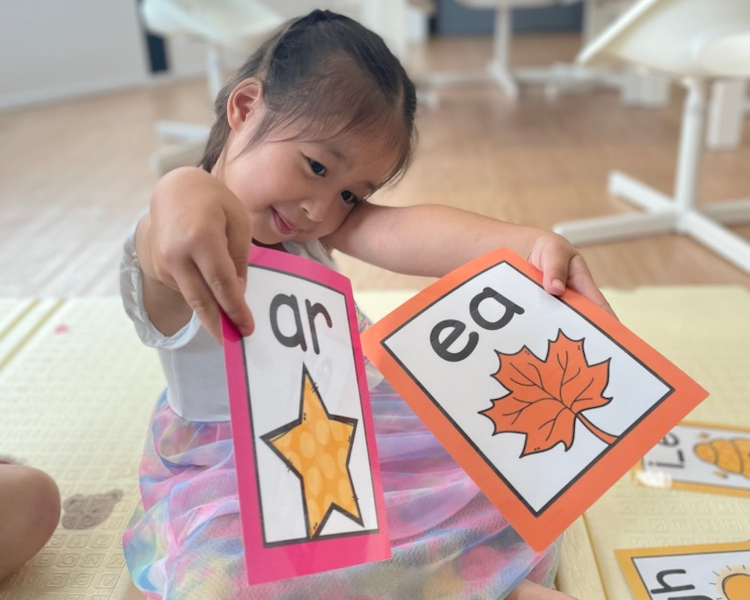
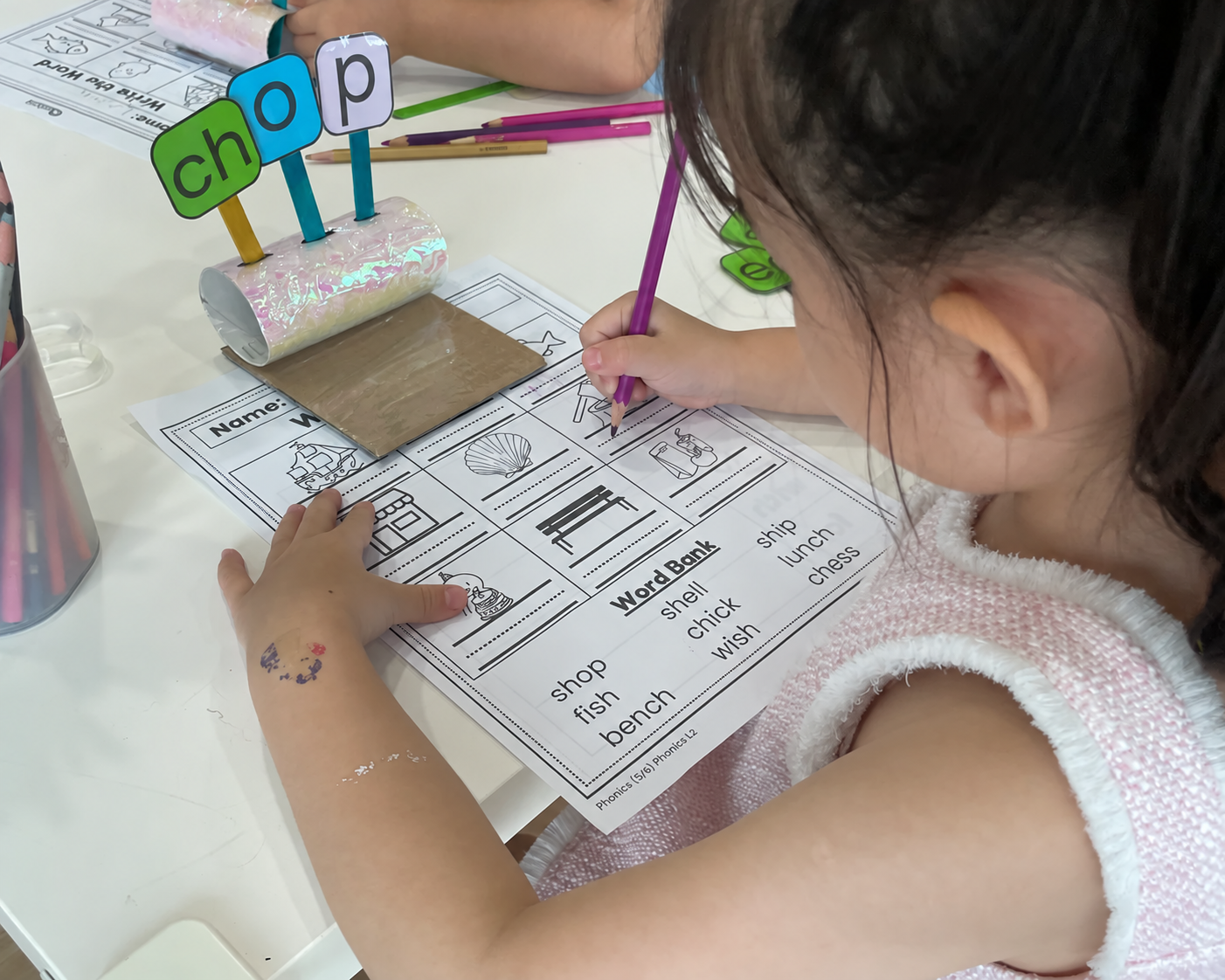
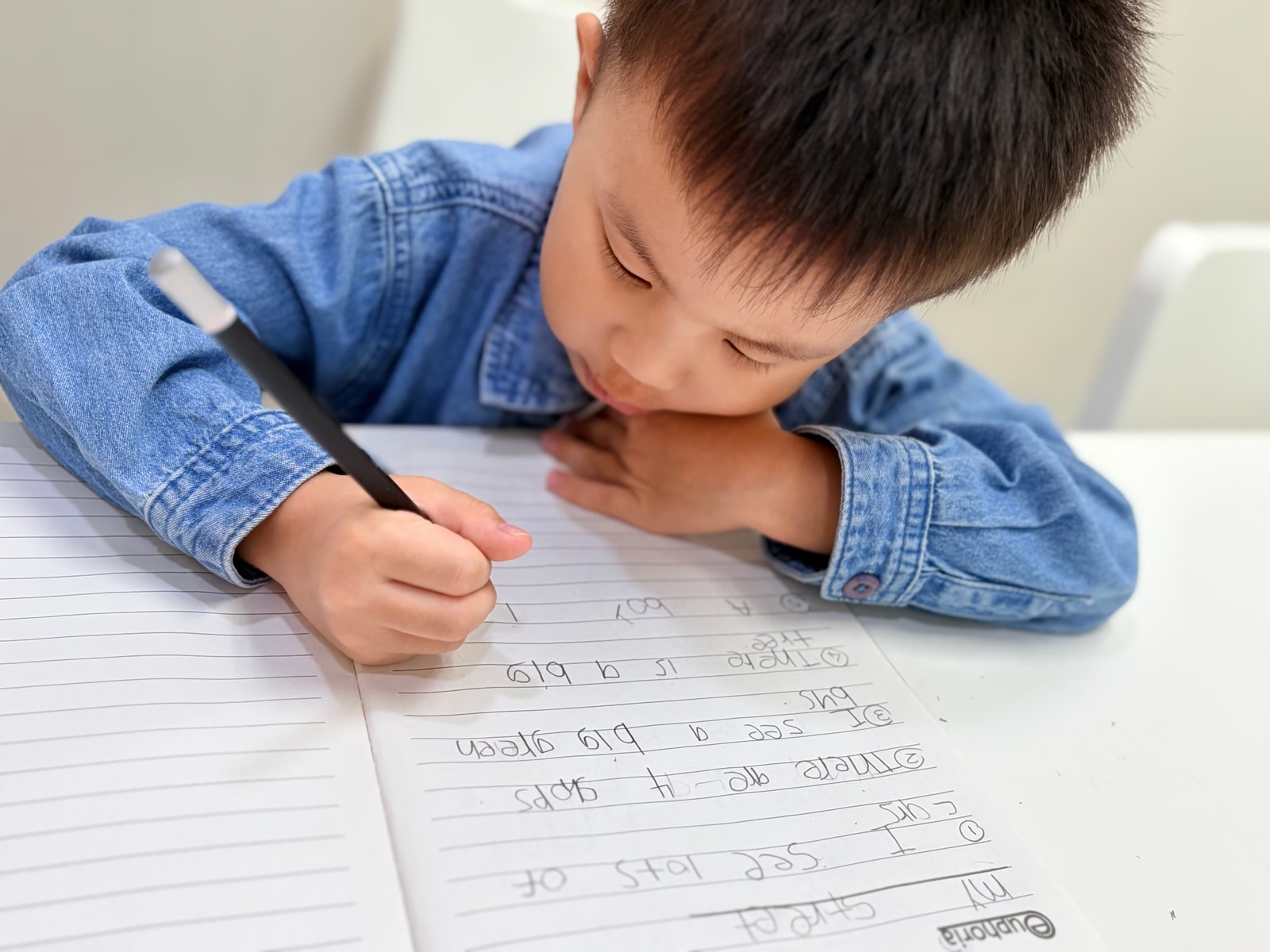
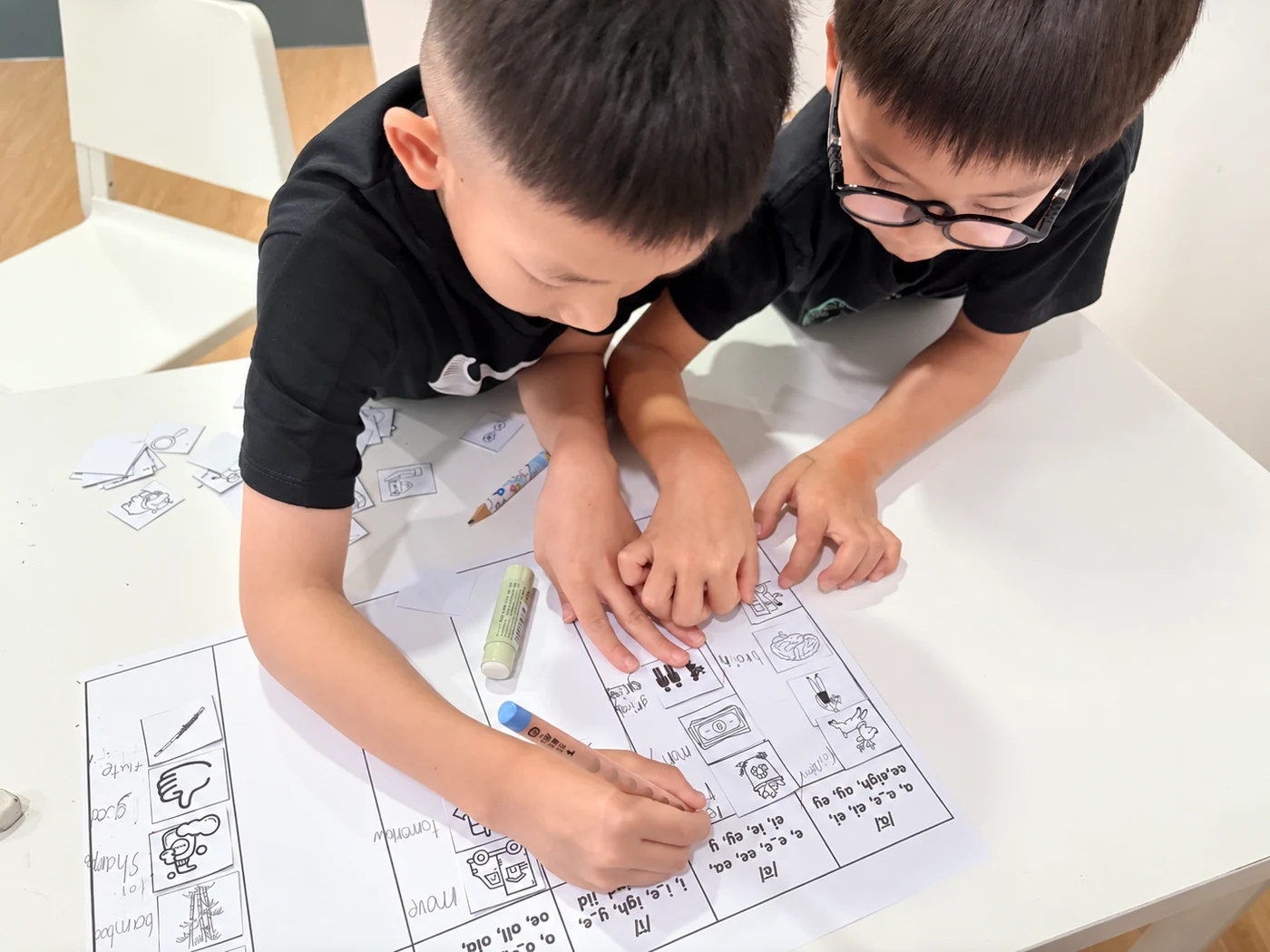
1 / 4 · Moments from our classroom
Across six progressive levels, children learn how the sound–spelling system works. Guided practice and cumulative revision build the ability to recall, distinguish and apply patterns—not simply memorise a list of words.
What your child learns
Learn letter sounds and the groups of letters that represent sounds. Blend them to read unfamiliar words, progressing to alternative spelling patterns and longer words.
Listen for sounds in words, recall the spellings taught and use them in written work. Reading a pattern and recalling it for spelling both receive purposeful practice.
Build accurate, increasingly fluent reading, then make sense of the sentences and passages. Reading is about understanding as well as saying the words.
Bring sound–spelling knowledge, sight words and vocabulary together to write sentences with increasing independence.
Build confidence and the ability to sustain reading and written work, with demands matched to the stage of learning.
Grow familiar with school-style written tasks towards K2 while strengthening the reading and spelling foundations those tasks depend on.
Inside the lesson
The teacher introduces the sound–spelling connection and models how to use it in words.
Carefully chosen words, sentences and activities reinforce the same pattern from different angles. Earlier learning returns through cumulative revision.
Teachers look at what the child can recall and apply, including when reading and spelling. The next step follows demonstrated learning.
Not automatically. We place children by current skills, not age alone. Assessment helps us recommend a suitable Level 1–6 starting point, considering phonics, reading, spelling, comprehension and the support needed to work independently.
Preschool children follow a structured, progressive phonics sequence in a group matched to their assessed ability. Teachers guide practice and check progress within that sequence. Individual learning plans are the defining structure of our Primary English programme.
We check how your child handles unfamiliar words and recalls spellings, rather than assuming that reading familiar books means every foundation is secure. Assessment helps identify what is already established and what would benefit from further teaching.
Feedback after each class explains the areas covered, what the teacher observed and the next steps. You can also book a complimentary time with the teacher to discuss progress.
Tell us your child’s age, school year, areas of concern and preferred date and time for a free 15-minute assessment.
Looking for another stage? Explore Primary English