Preschool · Spelling · Sentence writing
My child can read—but struggles to spell and write sentences

Your child can read, maybe even well. They may already have learnt phonics and can sound out words they have never seen before. Reading seems to come naturally now.
But ask them to spell a word or write a short sentence, and it can feel like a world apart. Spellings are uncertain, words run together, and getting a sentence onto the page takes much more effort than reading one aloud.
Some parents expect this to improve with age and exposure. Others worry when the same difficulties keep appearing. If your child is in K2, you may be wondering how to support them before the step up to Primary 1.
Understanding what your child can already do, which spelling patterns they have been taught, and what they need to learn next helps you choose the right support—not simply more writing practice.
What a teacher sees in a student’s writing
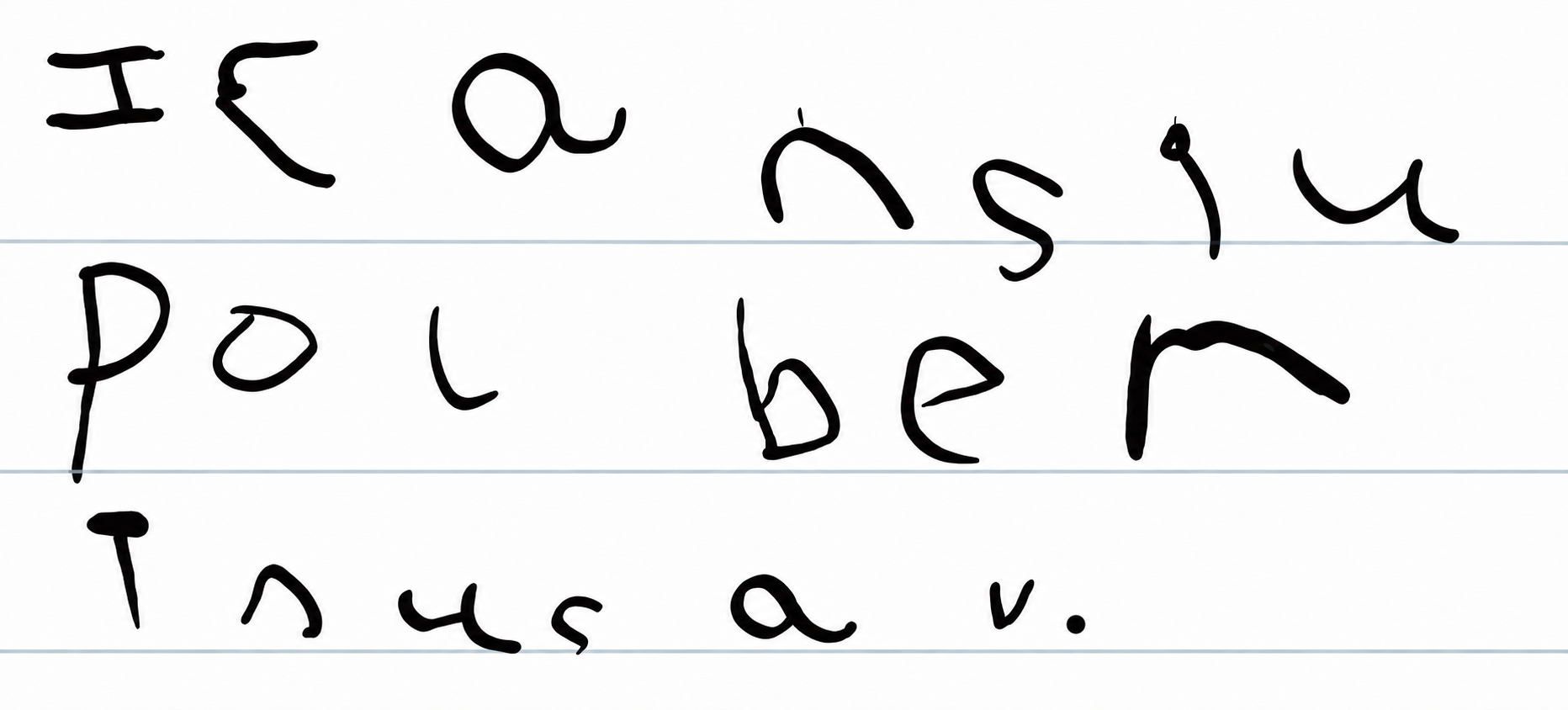
A parent shared some classroom writing with us. One child was trying to write:
“I can see a polar bear in a cave.”
A teacher can see that the child is using his phonics knowledge to sound out spellings. Here is what we notice:
- “si” for “see”: he has identified the starting sound and attempted to write the vowel sound. The spelling is not correct, but we can see how he is trying to sound out the word.
- “u” for “a”: he appears to be spelling the little word as he hears it when the sentence is spoken, rather than recalling its conventional spelling.
- “cav” for “cave”: he has included c, a and v. What is missing is the final e in the magic-e spelling pattern—something that needs to be taught and practised.
- Sentence punctuation: he starts with a capital letter and ends with a full stop.
The words polar bear also contain less familiar spelling patterns: the ar in polar has a soft, unstressed “uh” sound, called schwa, while ear in bear represents the “air” sound. We would check whether the child has learnt these patterns before expecting him to spell them accurately.
We would also ask how old the child is and where he is in the school year. The same writing sample needs to be considered differently for a child just beginning K1 and one approaching Primary 1.
In this case, the child was nearing the end of K2. If this reflects his usual independent writing, we would consider it below the level of spelling and written application we would expect at this stage. In our view, focused reinforcement should begin now and continue into Primary 1, rather than waiting for age or exposure alone to resolve the difficulties.
This does not mean expecting perfect spelling or every spelling pattern to be mastered; it means checking his foundations and giving timely support where it is needed.
This gives a teacher specific things to build on. We would work on clearer spaces between words, helping him hear where one word ends and the next begins. We would also check which spelling patterns he has learnt before choosing what to teach next.
For example, ee in see and a_e in cave may be useful teaching points, depending on his current learning. If he has not learnt a pattern yet, we should not expect him to know it simply because he can read the word.
If he has learnt it, we would check whether he can recall it when spelling without a model, and then use it in a short sentence.
That is how the writing sample helps us plan: recognise the phonics knowledge he is already using, identify what is missing, and give him focused teaching and practice.
“But my child has already learnt phonics.”
It helps to ask what that learning has involved. Has your child been taught to recognise sounds and blend them to read? Have they also been explicitly taught spelling patterns and practised choosing them when writing?
Take the word rain. When reading, the letters r–ai–n are already on the page. When spelling, the child has to hear the sounds and recall which letters to write.
A child who writes rayn may be using a spelling they know for the long-a sound. The next step is to help them choose the spelling that belongs in this word.
We can teach useful clues: ai often appears in the middle, as in rain and train, while ay often comes at the end, as in day and play. These are not rules that decide every spelling—cake, for example, uses a_e.
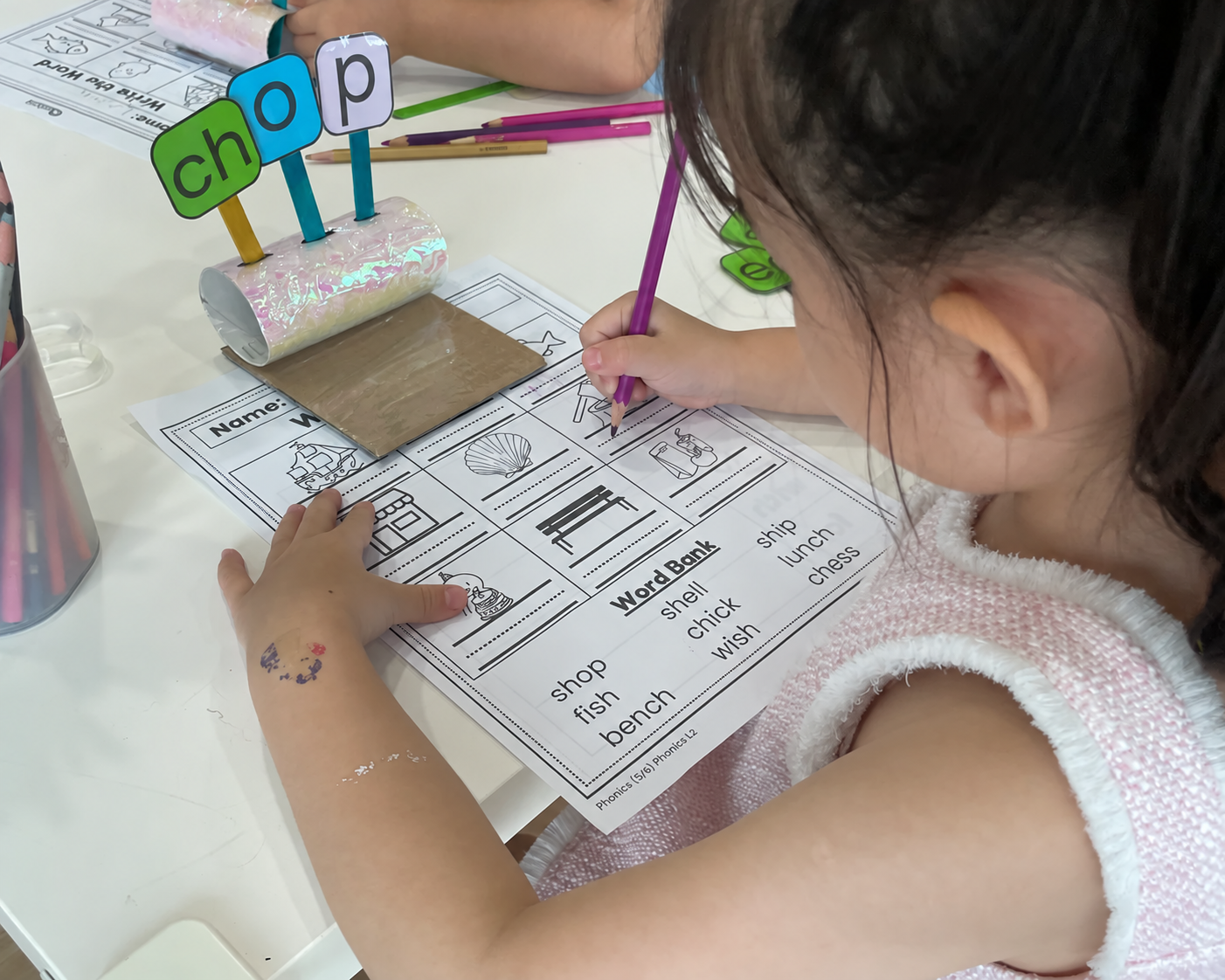
This is why “knowing the sounds” and being able to use spelling patterns need to be checked separately. Reading through phonics is called decoding; identifying sounds and choosing letters to spell a word is called encoding. Children need teaching and practice in both.
At Euphoria, reading and spelling are taught together from Level 1
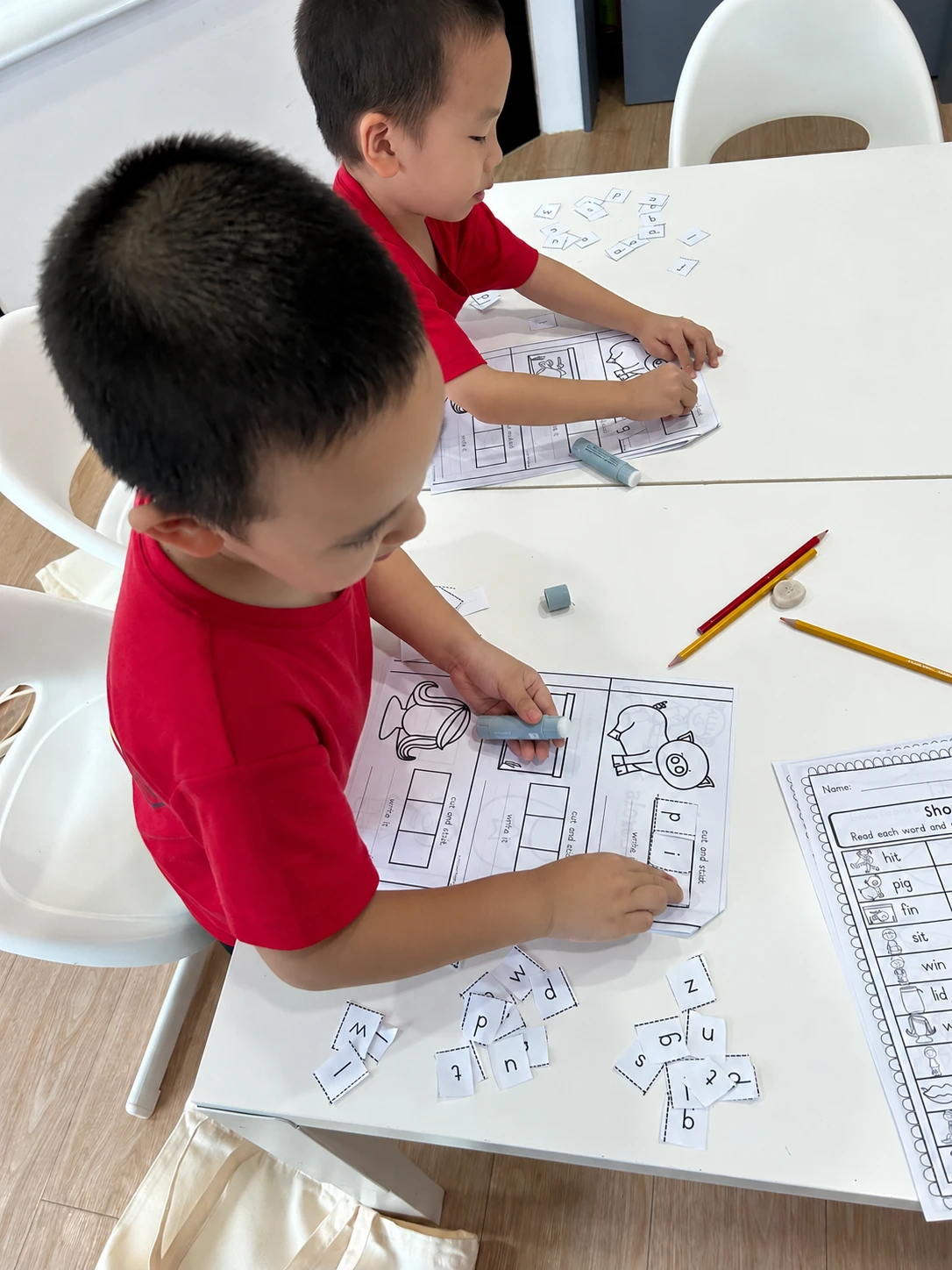
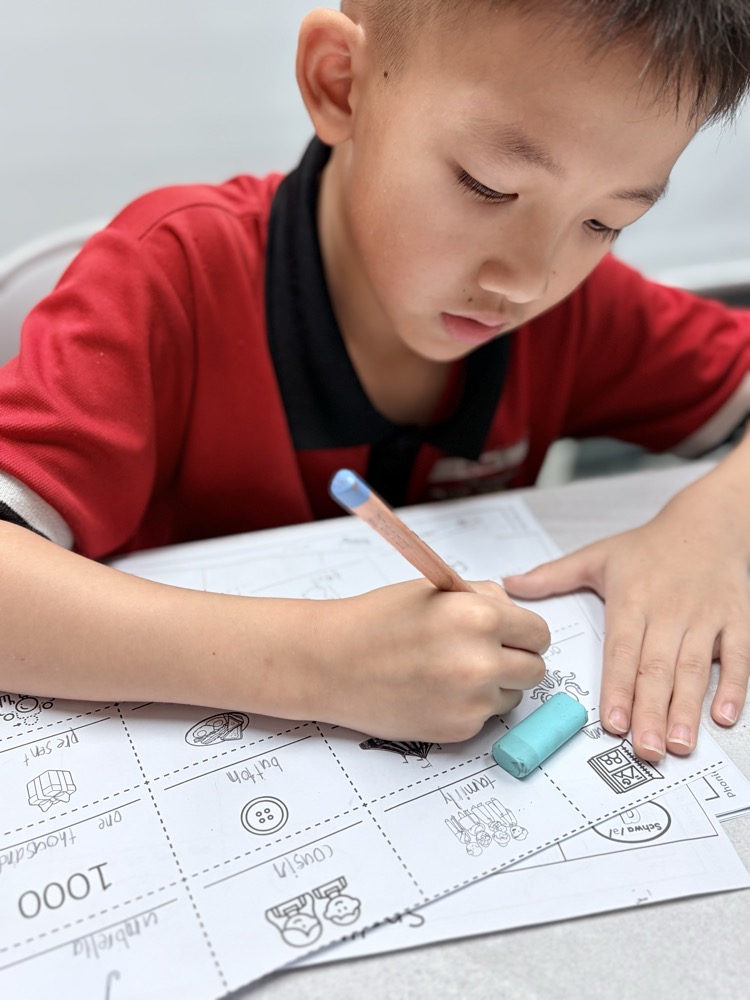
In our Preschool Phonics programme, both receive equal emphasis from the beginning.
In Level 1, children say sounds while tracing or forming the corresponding letters. They are connecting the sound they hear and say with the letter shape they see and the movement they make when writing it.
As they begin simple consonant–vowel–consonant words such as mat, we work in both directions. They look at m–a–t, say the sounds and blend them to read mat. They also hear mat, separate its sounds and choose the letters to spell it.
We continue this connection as spelling patterns become more complex and children use them in short sentences. Tracing and copying can support the first steps, but we also check what children can recall and write without a model.
Reading, spelling, comprehension and early writing develop together through a structured progression. We do not wait until a child has finished learning to read before working on spelling.